REI in Japanese means black or dark.
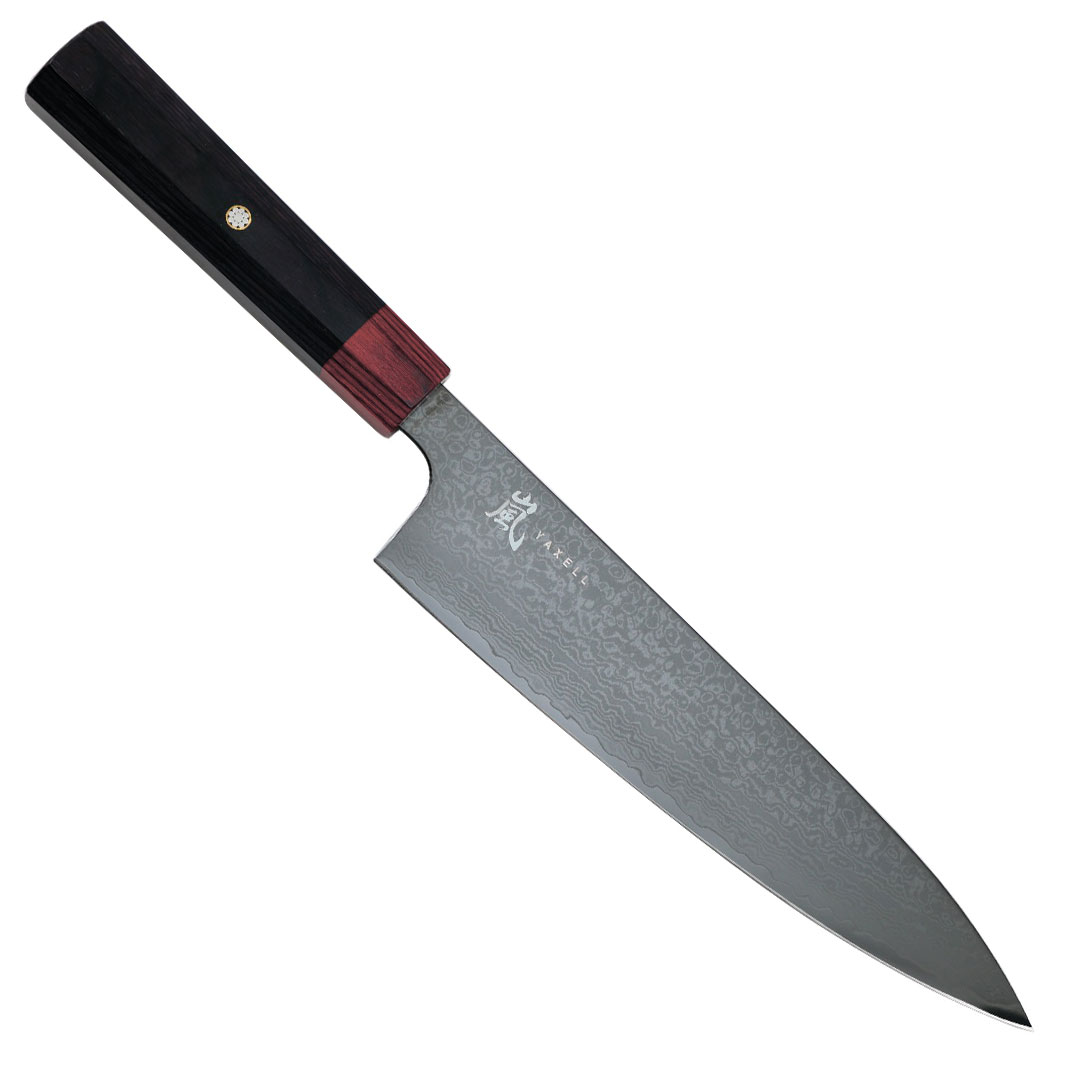
One of the world’s finest steels, paired with Yaxell’s signature pattern on a completely black blade – a masterpiece among knives.
A must-have in the kitchen for slicing vegetables into sticks, julienne cuts, chopping herbs, and cutting large pieces of meat or fish.
VG10 steel with 1% carbon resists corrosion and achieves a Rockwell hardness of 61. Its 15% chromium enhances wear and rust resistance, while cobalt adds toughness and molybdenum increases hardness.
The cutting angle is razor-sharp and durable – truly a fearsome edge.
The blade is made from VG10 Damascus steel with a sleek black DLC (Diamond-Like Carbon) coating.
Its two-tone black and red Pakkawood handle (a durable composite) resists moisture and temperature changes, and features the inlaid crest of a samurai lineage.
A perfectly crafted knife – worthy of being your loyal companion in the kitchen.
Care and Maintenance of Japanese Knives
✅ Proper Knife Care
Always hand wash the knife with warm water and dry it immediately with a soft cloth to maintain sharpness and quality.
To keep the edge precise, water stones are recommended for sharpening, while ceramic honing rods help refine the blade during regular use.
Store the knife in a safe place, avoiding contact with other kitchen utensils that could damage the edge.
Use wooden, plastic, or rubber cutting boards to protect the blade and extend its lifespan.
⚠️ Special Note for Traditional Japanese Steels
Japanese knives made from high-carbon steel require extra care to prevent oxidation and rust.
After each use, thoroughly clean the blade with warm water and immediately dry it completely with a soft cloth.
Applying a thin layer of mineral or camellia oil occasionally can further protect the blade from corrosion.
Knives should be stored in a dry place, avoiding prolonged exposure to moisture or contact with aggressive cleaning agents.
? Improper Use
Do not cut on hard surfaces like glass, ceramics, steel, metal tables, or baking trays.
Avoid cutting bones or frozen ingredients, as this can damage the blade edge.
Do not wash the knife in a dishwasher—chemicals and high temperatures can negatively impact the blade and handle.
A Japanese knife is a precision tool, designed for specific culinary tasks. Do not use it for inappropriate activities like chopping bones, opening cans, or handling non-food materials.
Send request