Supreme Hammered – The Most Complex VG10 Steel Execution
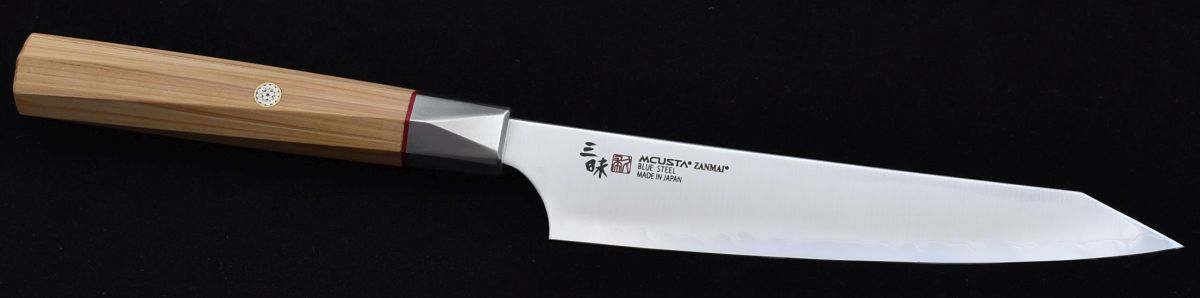
Supreme Hammered represents the pinnacle of Mcusta’s craftsmanship, combining an extraordinary design with the perfection of traditional Japanese blade-making techniques. This knife series exudes elegance and precision, with every detail showcasing dedication to superior artistry.
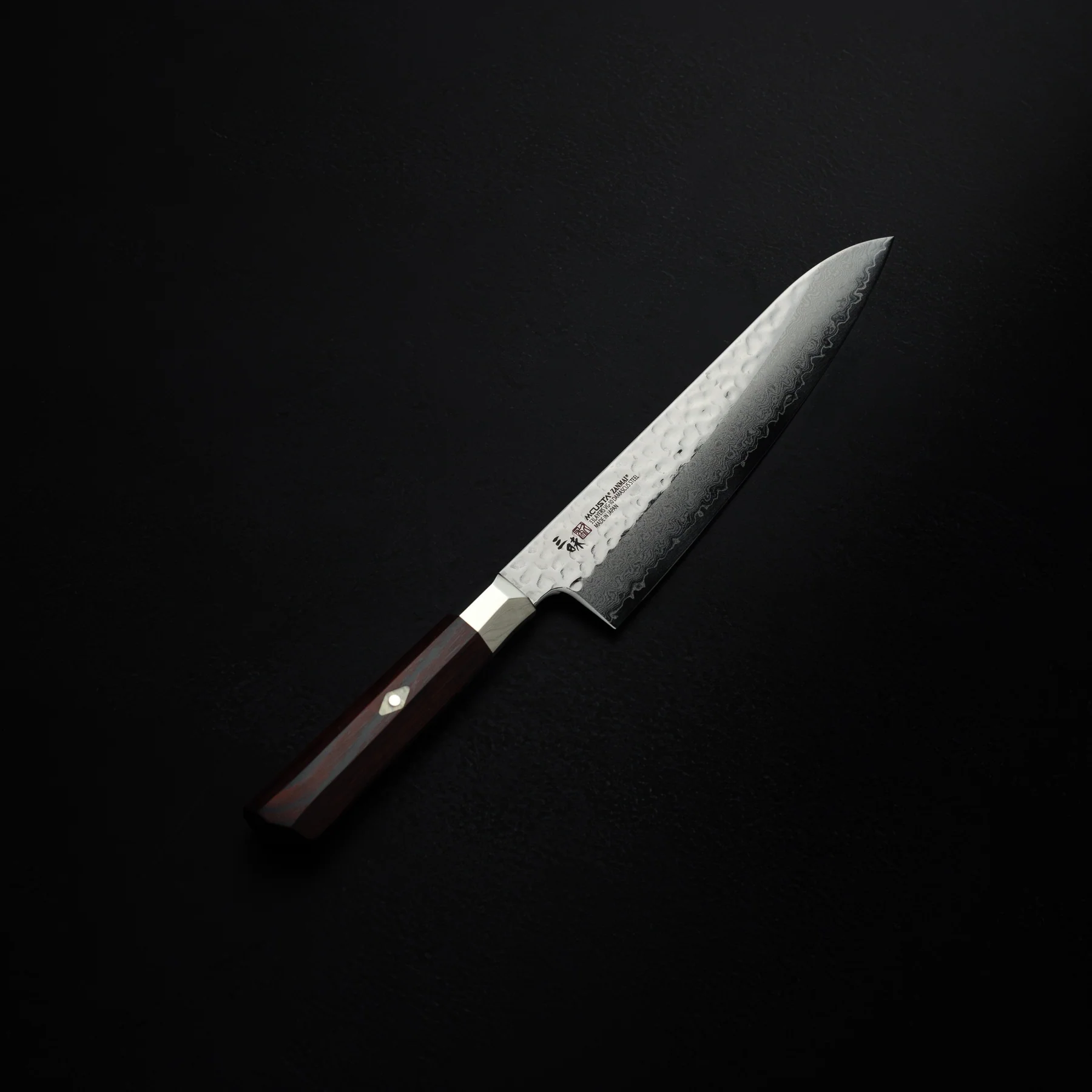
The Gyuto knife with a 210mm blade is the most sought-after model in this series. No matter the culinary challenge, it remains the perfect choice. Designed for versatile kitchen tasks, it excels in cutting meat, chopping vegetables, mincing garlic and spices, and preparing fish fillets. Its functional profile and thin blade ensure effortless slicing without resistance.
The highlight of this knife is its blade. The 33-layer Damascus pattern with a VG10 steel core creates a stunning visual effect and delivers exceptional performance. The polished hammering marks reflect light, leaving a subtle impression of elegance reminiscent of a calm sea.
Beyond the blade, the handle of this knife commands attention. Crafted from pakkawood in an exclusive hybrid octagonal shape, it ensures perfect balance and comfort during use. Every handle undergoes meticulous hand-finishing, a process unique to Mcusta’s forge – guaranteeing a level of quality that no other workshop can replicate.
Specifications:
Manufacturer: Mcusta Zanmai
Blade Type: Gyuto
Blade Length: 210mm
Overall Length: 350mm
Knife Weight: 200g
Bevel Type: Double bevel
Spine Thickness: 2mm
Steel: VG10
Hardness HRC: 61±1
Care and Maintenance of Japanese Knives
✅ Proper Knife Care
Always hand wash the knife with warm water and dry it immediately with a soft cloth to maintain sharpness and quality.
To keep the edge precise, water stones are recommended for sharpening, while ceramic honing rods help refine the blade during regular use.
Store the knife in a safe place, avoiding contact with other kitchen utensils that could damage the edge.
Use wooden, plastic, or rubber cutting boards to protect the blade and extend its lifespan.
⚠️ Special Note for Traditional Japanese Steels
Japanese knives made from high-carbon steel require extra care to prevent oxidation and rust.
After each use, thoroughly clean the blade with warm water and immediately dry it completely with a soft cloth.
Applying a thin layer of mineral or camellia oil occasionally can further protect the blade from corrosion.
Knives should be stored in a dry place, avoiding prolonged exposure to moisture or contact with aggressive cleaning agents.
? Improper Use
Do not cut on hard surfaces like glass, ceramics, steel, metal tables, or baking trays.
Avoid cutting bones or frozen ingredients, as this can damage the blade edge.
Do not wash the knife in a dishwasher—chemicals and high temperatures can negatively impact the blade and handle.
A Japanese knife is a precision tool, designed for specific culinary tasks. Do not use it for inappropriate activities like chopping bones, opening cans, or handling non-food materials.
Send request