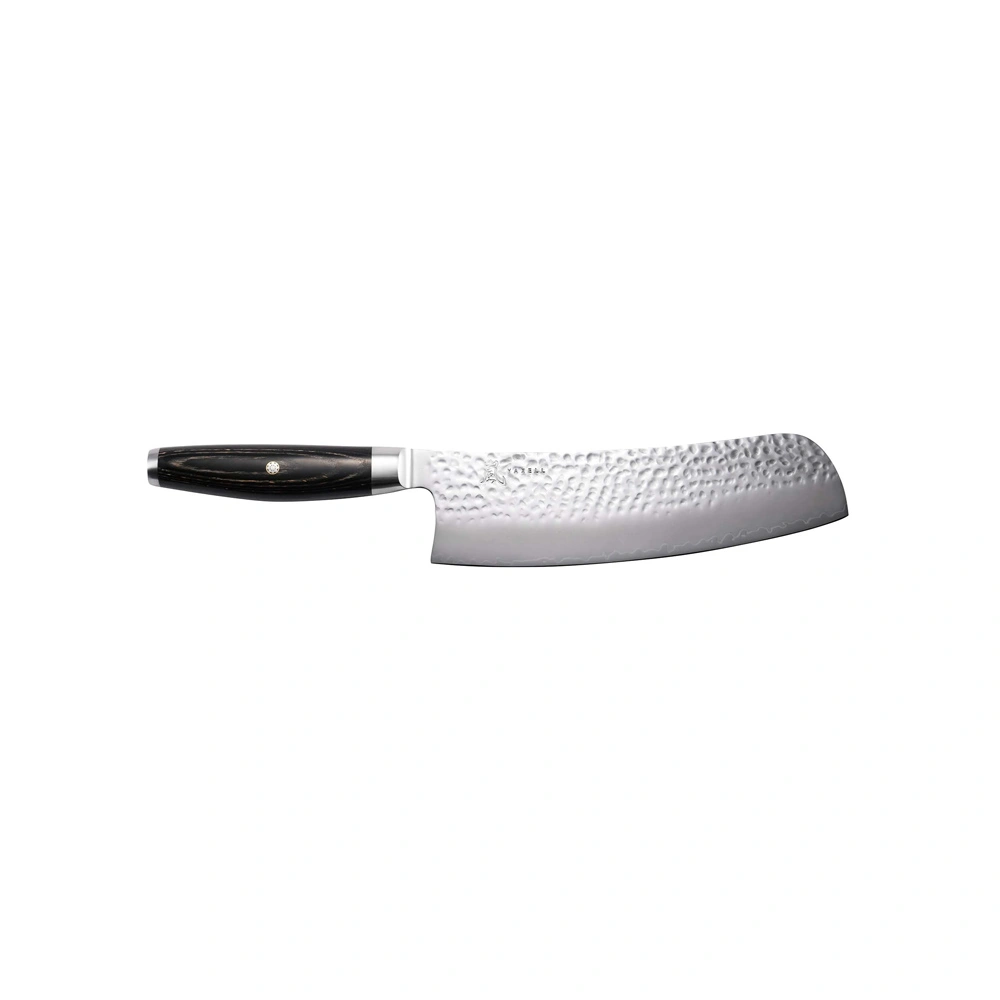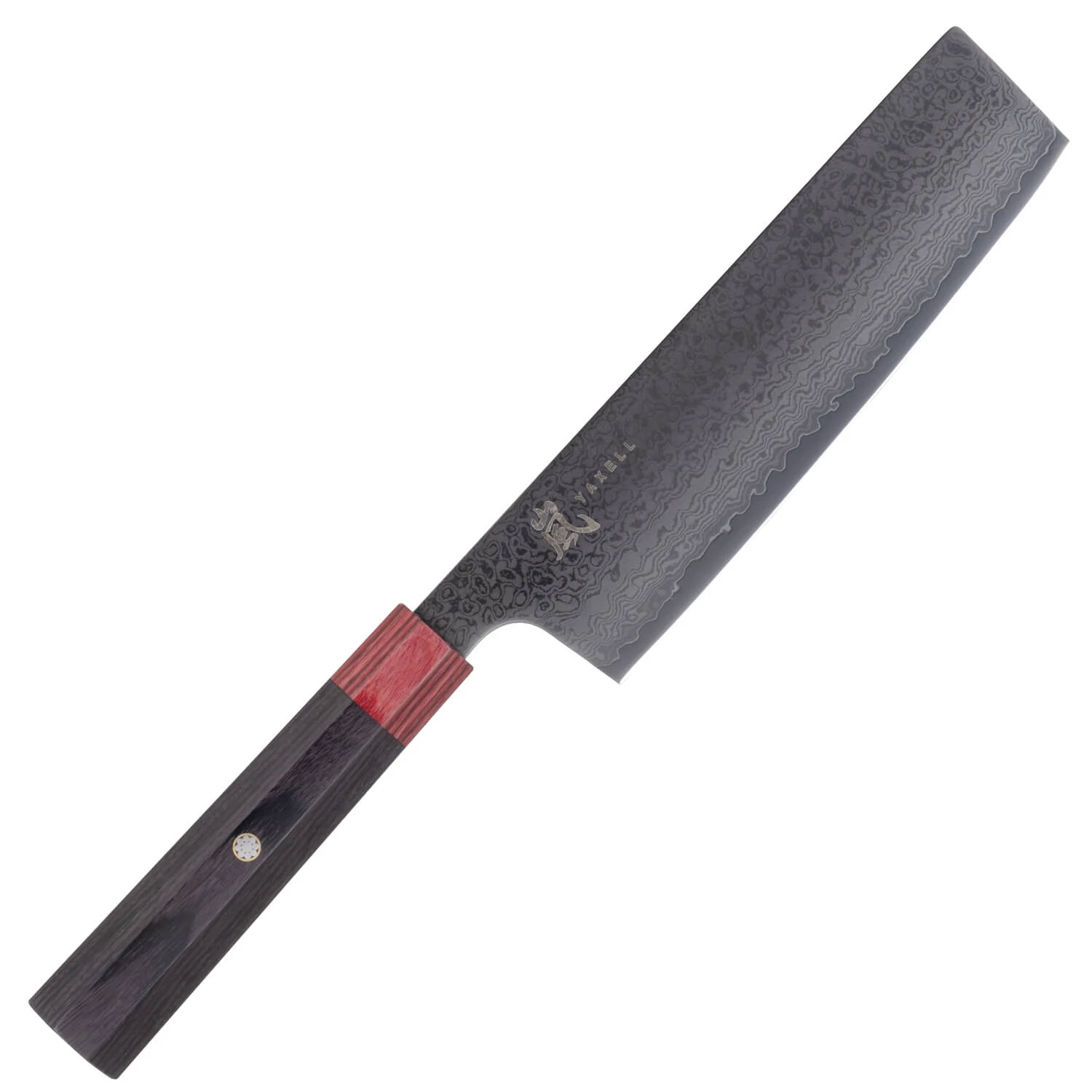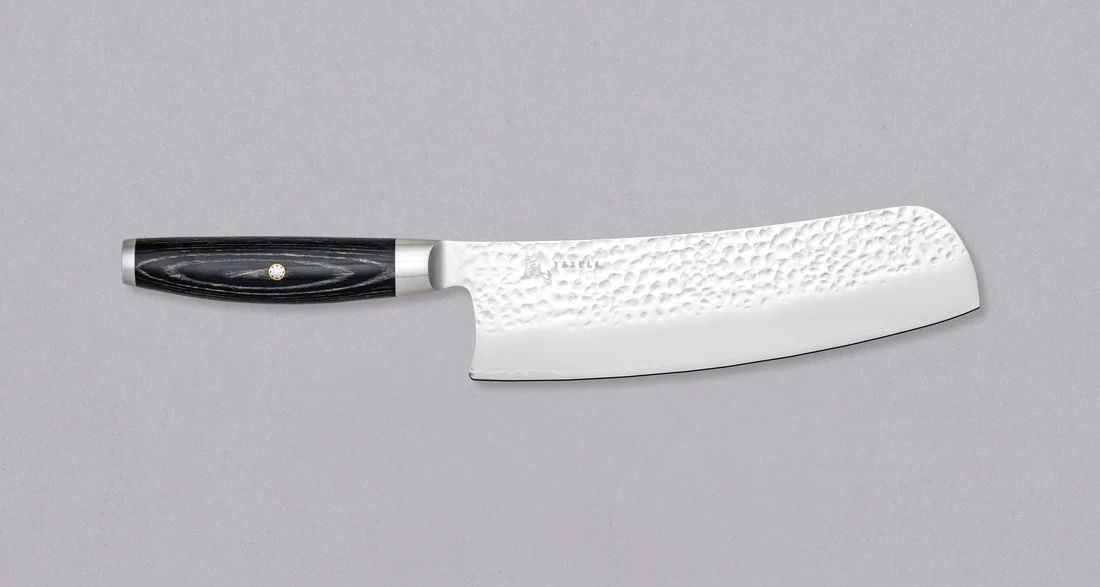
Yaxell Ketu Konata 215 mm is a large, elegant Japanese knife designed for versatile use. The blade shape is an interesting blend of santoku, nakiri, and the traditional Chinese chef’s knife, often referred to as a chopping cleaver. Essentially, this knife belongs to the category of all-purpose kitchen knives suitable for preparing a wide range of vegetable and meat dishes.
The knife is made from three layers of stainless steel, featuring a core of durable SG2 steel (63 HRC) and an elegant black pakkawood handle. It is suitable for both amateur and professional chefs.
Blade shape: The Konata combines characteristics of several knife types, all sharing the ability to efficiently chop large quantities of vegetables. The wide blade surface makes it easy to transfer chopped ingredients from the cutting board. Although it resembles a cleaver, this knife is not intended for cutting meat with bones, but for precise and delicate food preparation.
Steel: The core is made of premium powdered SG2 steel (63 HRC), one of the hardest steels used in Japanese kitchen knives. Its hardness of 62–63 HRC ensures long-lasting sharpness and a smooth cutting edge.
Geometry: The blade is double-beveled (suitable for both left- and right-handed users) and features a flat V-edge profile, offering an excellent balance between cutting performance and durability.
Lamination: The san-mai (sandwich) construction consists of an SG2 steel core clad between two outer layers of softer stainless steel, making the knife easy to maintain.
Finish: The final stage of production includes a delicate tsuchime (hammered) pattern on the blade, along with a concave kanji signature of the Yaxell forge as a distinctive detail.
Handle: The black pakkawood handle provides exceptional balance, durability, and resistance to wear. It is designed to offer a secure grip and prevent the hand from slipping toward the blade. The stainless steel end cap creates a smooth transition between the handle and the blade, while a decorative mosaic pin adds an aesthetic touch.
The bottom of the knife is flat, and the end features a steel plate engraved with the traditional crest of the samurai family from which Yaxell originates. This part can also be used for various kitchen tasks, such as crushing garlic.
Care and Maintenance of Japanese Knives
✅ Proper Knife Care
Always hand wash the knife with warm water and dry it immediately with a soft cloth to maintain sharpness and quality.
To keep the edge precise, water stones are recommended for sharpening, while ceramic honing rods help refine the blade during regular use.
Store the knife in a safe place, avoiding contact with other kitchen utensils that could damage the edge.
Use wooden, plastic, or rubber cutting boards to protect the blade and extend its lifespan.
⚠️ Special Note for Traditional Japanese Steels
Japanese knives made from high-carbon steel require extra care to prevent oxidation and rust.
After each use, thoroughly clean the blade with warm water and immediately dry it completely with a soft cloth.
Applying a thin layer of mineral or camellia oil occasionally can further protect the blade from corrosion.
Knives should be stored in a dry place, avoiding prolonged exposure to moisture or contact with aggressive cleaning agents.
? Improper Use
Do not cut on hard surfaces like glass, ceramics, steel, metal tables, or baking trays.
Avoid cutting bones or frozen ingredients, as this can damage the blade edge.
Do not wash the knife in a dishwasher—chemicals and high temperatures can negatively impact the blade and handle.
A Japanese knife is a precision tool, designed for specific culinary tasks. Do not use it for inappropriate activities like chopping bones, opening cans, or handling non-food materials.
Send request