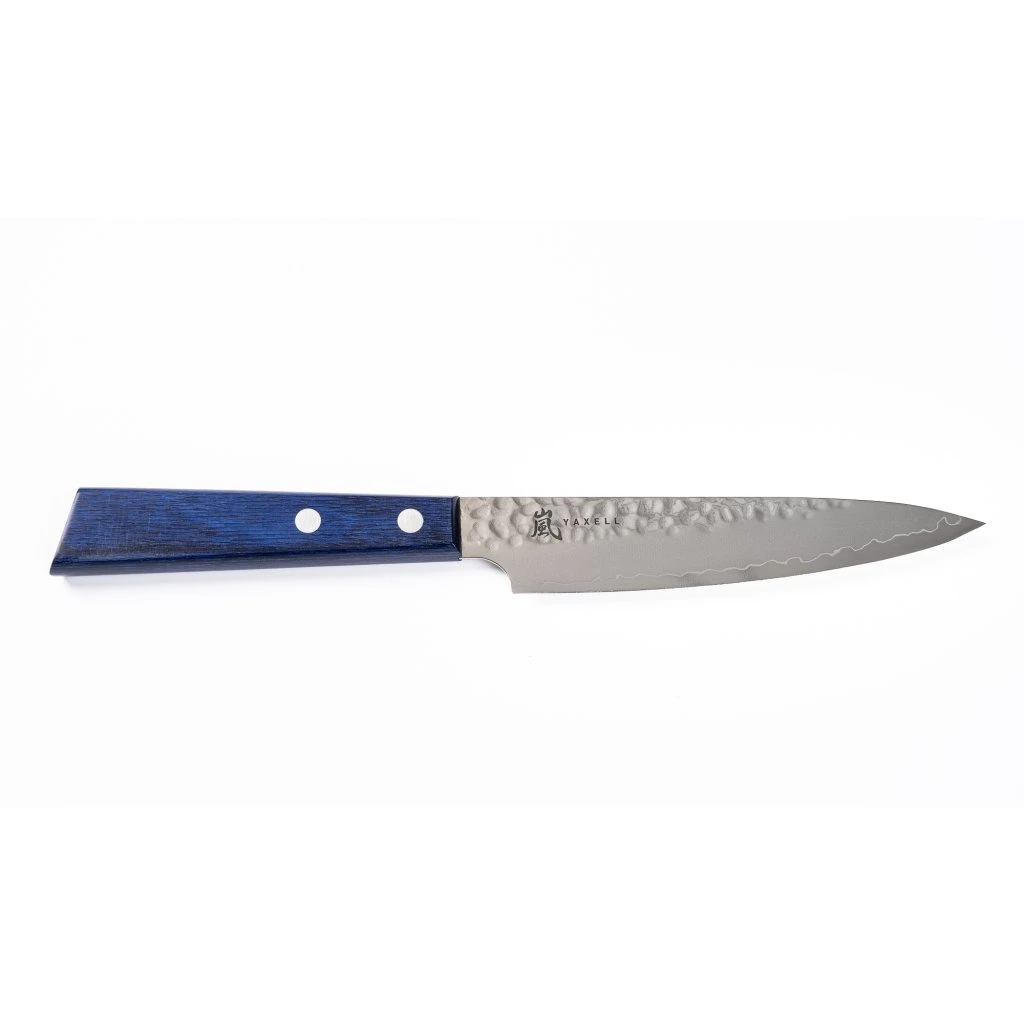
The Yaxell Blue Breeze Japanese vegetable knife is crafted using a traditional multi-layer forging method. Its three-layer blade is forged from Movax Superior steel, which combines chromium, molybdenum, and vanadium. Each side of the core is reinforced with high-quality Japanese stainless steel. The durable new blue handle from Yaxell's collection is made from laminated Pakka wood. Blade hardness is rated at C58 on the Rockwell scale.
Japanese kitchen knives are made of very hard and thin metal. They should not be used for chopping or twisting hard items such as frozen or bone-in meats, coconuts, or can lids — the blade may break.
High-quality kitchen knives should be hand-washed and dried immediately to prevent rust. Store them so that the blades do not come into contact with other metal objects.
✅ General Care
The knife should be washed by hand using warm water, then dried with a soft cloth to preserve its sharpness and material quality.
For long-term precision, use water sharpening stones; ceramic honing rods are ideal for fine edge adjustment during use.
Always store the knife properly to prevent contact with other kitchen tools and avoid potential damage.
It is recommended to use wooden, plastic, or rubber cutting boards, as they are gentler on the blade and extend its lifespan.
⚠️ Special Note on Traditional Japanese Steels
Japanese knives with high-carbon steel blades require special care to prevent oxidation and rust.
After each use, wash thoroughly with warm water and immediately dry with a dry cloth.
Occasionally applying a thin layer of mineral or camellia oil to the blade provides added corrosion protection.
Store knives in a dry place, avoiding prolonged exposure to moisture or aggressive cleaning agents.
? What to Avoid
Do not use the knife on hard surfaces such as glass, ceramic, steel, metal countertops, or baking trays.
Avoid cutting bones or frozen foods, as this may damage the edge.
Do not wash the knife in a dishwasher – chemicals and high temperatures can compromise both blade and handle integrity.
A Japanese knife is a precision instrument designed for specific culinary tasks. Do not use it for inappropriate purposes such as cutting bones, opening cans, or processing hard materials.
Send request