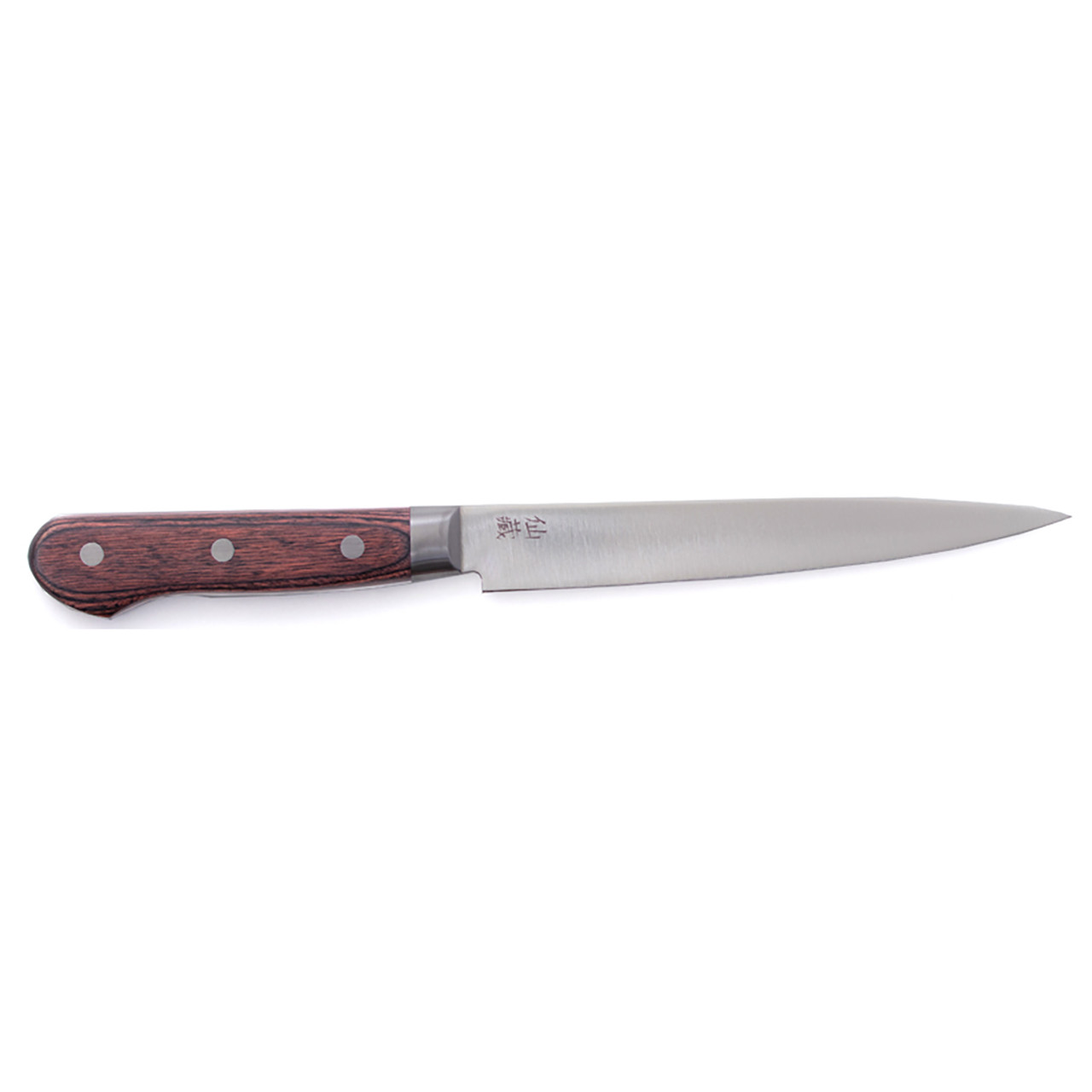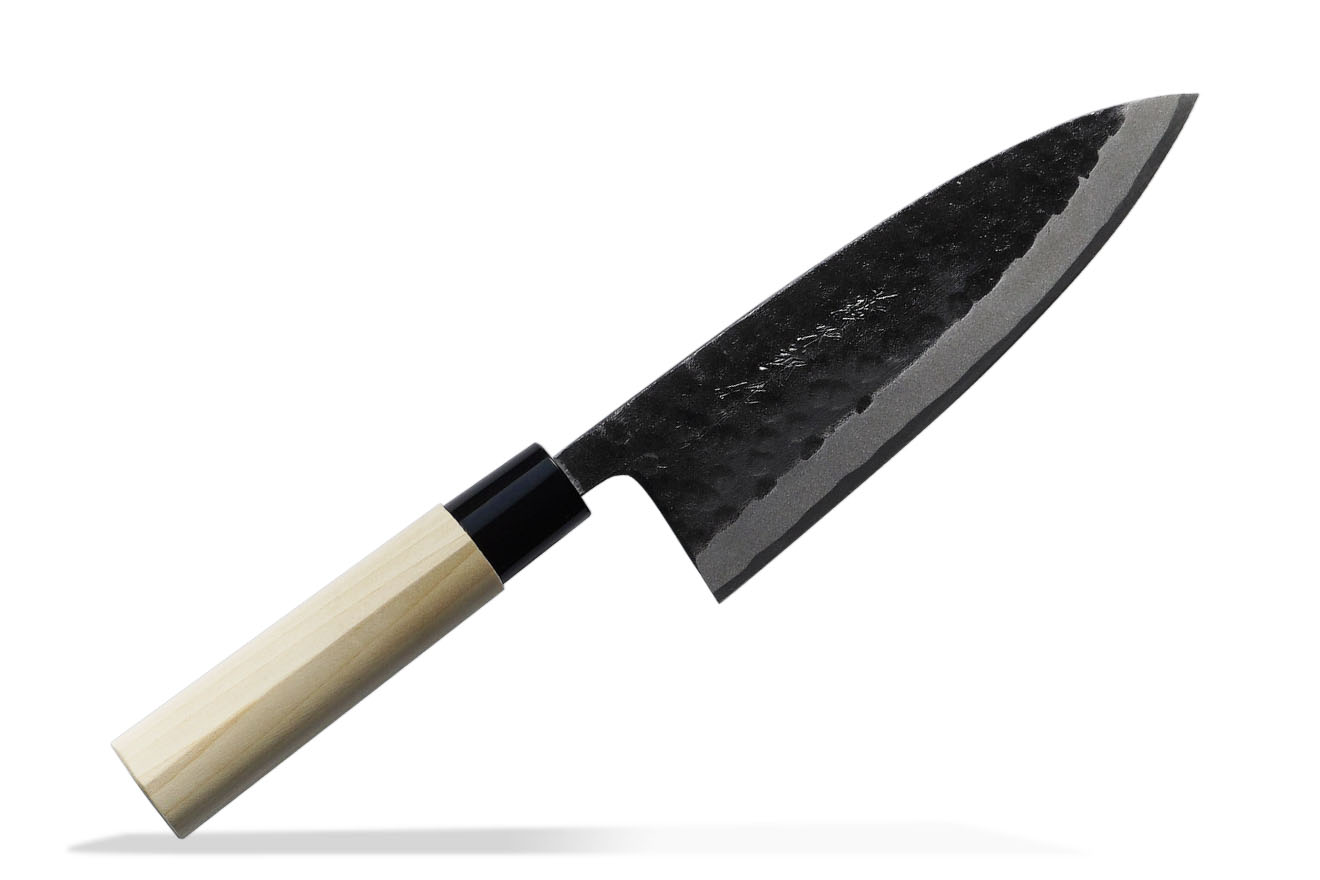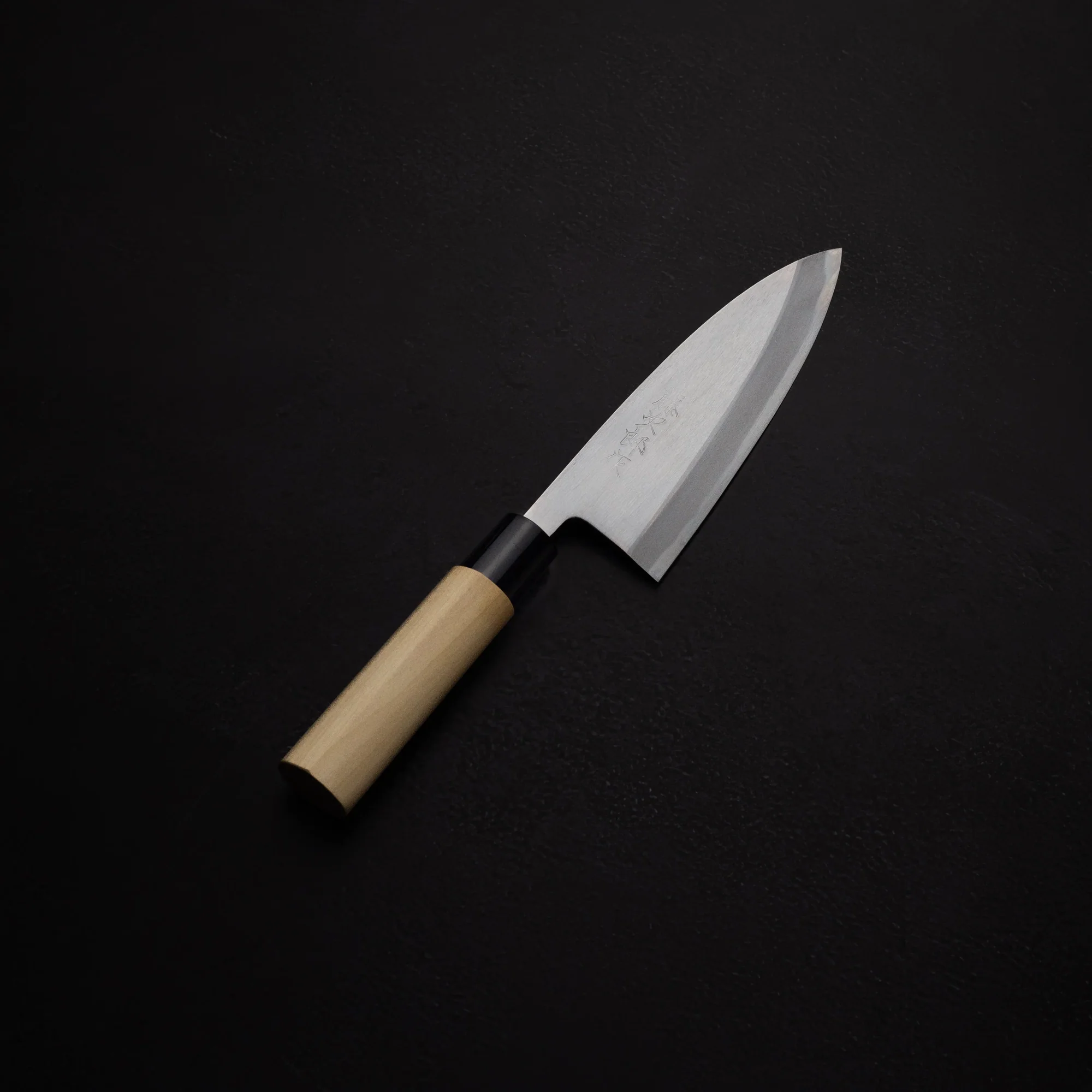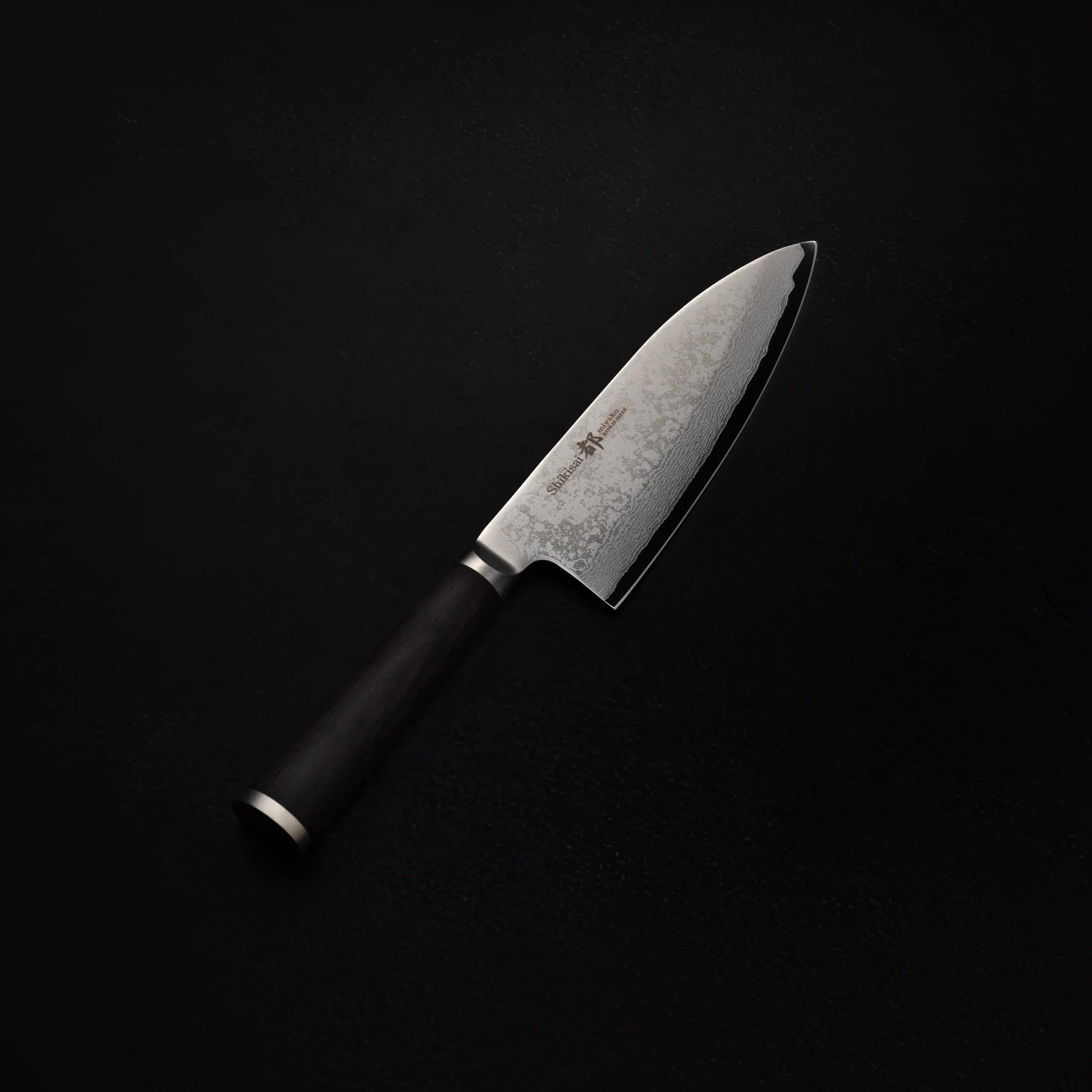
Traditional Deba knives are designed exclusively for processing fish with bones, but the Miyako series Deba offers something more. To begin with, the blade is asymmetrically ground at a 90/10 ratio, unlike traditional Deba knives, which are ground on one side. This gives the knife a higher level of sharpness, which it retains much longer and is easier to re-sharpen. The blade thickness is significantly thinner compared to the traditional variant, making this knife suitable for everyday chopping and cutting tasks, as well as fish filleting.
The most important difference is that the Miyako Deba is made from stainless steel, making it ideal for users who do not want a carbon steel knife in their collection. The blade is crafted from 33 layers of Damascus steel, featuring a stunning contrast between foggy layers and a highly polished central steel near the edge.
The handle is made from compressed wood, shaped in a D-form, and polished to a matte finish, providing a pleasant and secure grip.
Specifications
Manufacturer: Shizu Hamono
Blade type: Deba
Blade length: 165 mm
Total length: 297 mm
Knife weight: 200 g
Edge type: Asymmetrical 90/10
Spine thickness: 3 mm
Steel: AUS8
Hardness HRC: 60±1
Care and Maintenance of Japanese Knives
✅ Proper Knife Care
Always hand wash the knife with warm water and dry it immediately with a soft cloth to maintain sharpness and quality.
To keep the edge precise, water stones are recommended for sharpening, while ceramic honing rods help refine the blade during regular use.
Store the knife in a safe place, avoiding contact with other kitchen utensils that could damage the edge.
Use wooden, plastic, or rubber cutting boards to protect the blade and extend its lifespan.
⚠️ Special Note for Traditional Japanese Steels
Japanese knives made from high-carbon steel require extra care to prevent oxidation and rust.
After each use, thoroughly clean the blade with warm water and immediately dry it completely with a soft cloth.
Applying a thin layer of mineral or camellia oil occasionally can further protect the blade from corrosion.
Knives should be stored in a dry place, avoiding prolonged exposure to moisture or contact with aggressive cleaning agents.
? Improper Use
Do not cut on hard surfaces like glass, ceramics, steel, metal tables, or baking trays.
Avoid cutting bones or frozen ingredients, as this can damage the blade edge.
Do not wash the knife in a dishwasher—chemicals and high temperatures can negatively impact the blade and handle.
A Japanese knife is a precision tool, designed for specific culinary tasks. Do not use it for inappropriate activities like chopping bones, opening cans, or handling non-food materials.
Send request