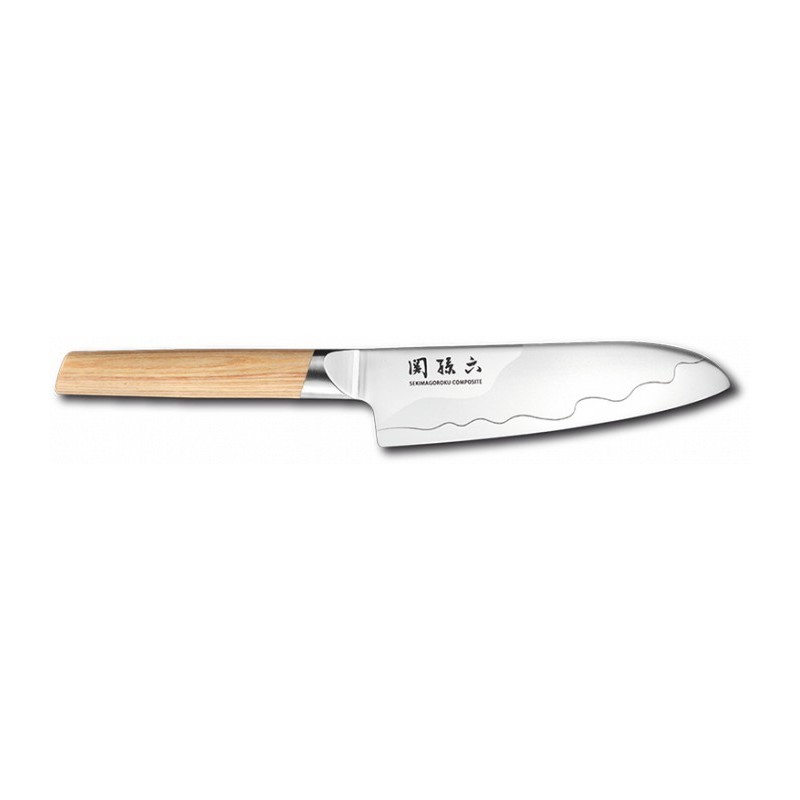
The innovative Seki Magoroku Composite Series features eight blade shapes with double-sided polished finishes. Each blade is crafted from a fusion of two distinct steels, creating a striking contrast between the mirror-polished core and the satin-finished outer layer. The core is made of VG MAX steel with a hardness of 61±1 HRC, while the outer layer uses SUS420J2 steel — a combination that ensures exceptional corrosion resistance and long-lasting cutting performance.
The blade manufacturing process draws on advanced aerospace technology, delivering outstanding precision and durability. The two steel grades are joined using a specialized copper brazing technique, leaving a subtle copper line that adds a refined visual accent.
The slim, tapered handle is made from lightweight Pakka wood. Its shape and diagonal grain pattern lend the knife a dynamic and elegant presence.
✅ Proper Maintenance
Hand-wash the knife with warm water, then dry it with a soft cloth to preserve sharpness and material quality.
For long-lasting precision, use whetstones, while ceramic honing rods are excellent for fine edge adjustments during use.
Always store the knife properly to avoid contact with other utensils and potential damage.
It is recommended to use cutting boards made of wood, plastic, or rubber, as they are gentler on the blade and prolong its lifespan.
⚠️ Special Note for Traditional Japanese Steels
Japanese knives with high carbon content require special care to prevent oxidation and rust.
After each use, thoroughly wash with warm water and immediately dry with a soft cloth.
It is advisable to occasionally apply a thin layer of mineral or camellia oil on the blade for additional protection against corrosion.
Store knives in a dry place, avoiding prolonged exposure to moisture or aggressive cleaning agents.
? What to Avoid
Do not use the knife on hard surfaces such as glass, ceramics, steel, metal tables, or baking trays.
Do not cut bones or frozen foods, as this can damage the knife edge.
Do not wash the knife in a dishwasher—chemicals and high temperatures can compromise the integrity of both blade and handle.
A Japanese knife is a precision tool designed for specific culinary tasks. Do not use it for improper activities such as cutting bones, opening cans, or processing hard materials.
Send request